


Stator layers need to be insulated? Dents in stator.


Thread Starter
|
Senior Member
Joined: Mar 2008
Posts: 3,406
From: N. Illinois
1st Gear Member
 Stator layers need to be insulated? Dents in stator.
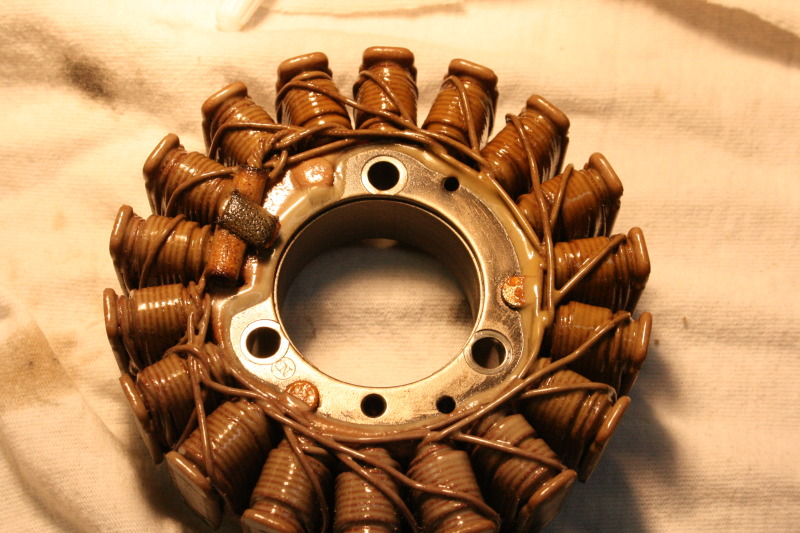
OK so some of the chewed up gear teeth from my stater fail( https://www.kawasakiforums.com/forum...e-cases-39378/ )must have been caught between the stator and the flywheel and impacted the stator, denting it. I don't know anything about how these things work, so I'm asking you guys. 
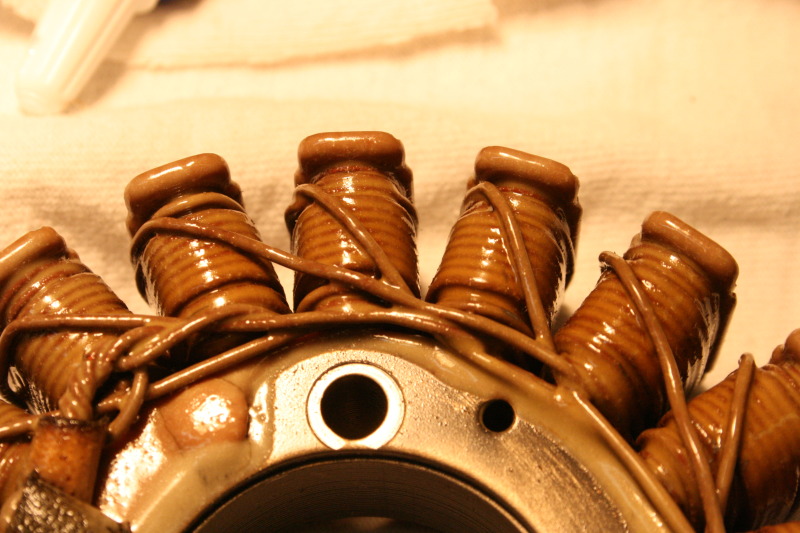
A couple of the "dents" look like they have tied together at least a few of the layers of the stator. My question is do these layers need to be insulated from each other? I plan on cleaning up these dents but would like to know how critical it is to keep the plates separated.
Thanks Dan.
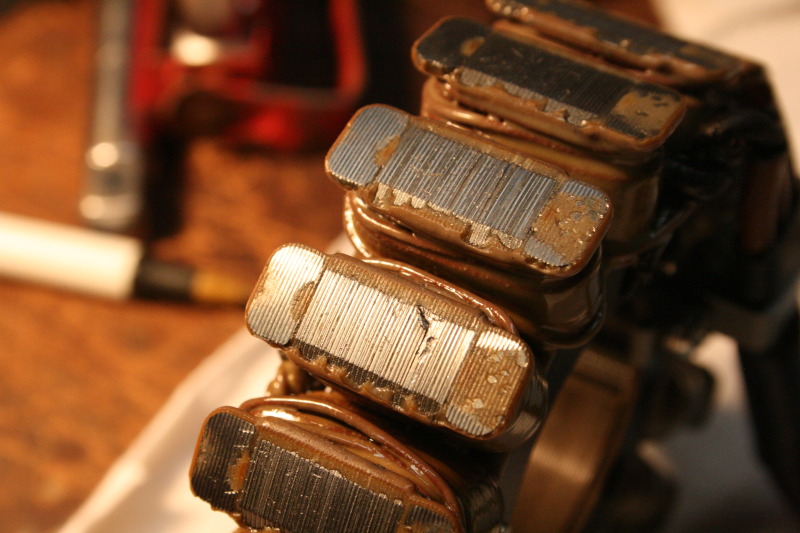
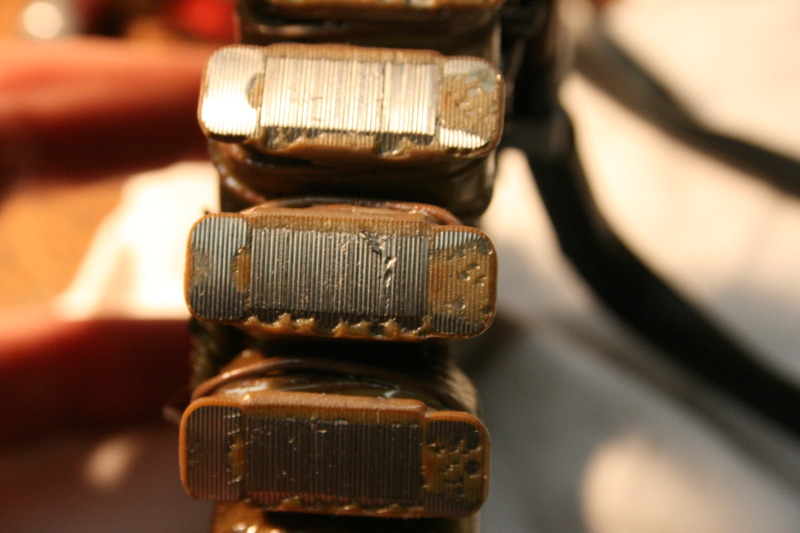
A couple of the "dents" look like they have tied together at least a few of the layers of the stator. My question is do these layers need to be insulated from each other? I plan on cleaning up these dents but would like to know how critical it is to keep the plates separated.
Thanks Dan.
Last edited by dan888; Feb 3, 2013 at 09:26 PM.

Senior Member
1st Gear Member
Joined: Jan 2013
Posts: 143
From: Central West NSW, Australia
Strictly speaking, yes. The laminations need to be insulated from each other to prevent eddy currents and excess heat production. Now back in the real world a couple of little dings here and there shouldn't make a HUGE difference and may not make a noticeable difference at all. It's not ideal, but it may not really matter that much either.
Thread Starter
|
Senior Member
Joined: Mar 2008
Posts: 3,406
From: N. Illinois
1st Gear Member
Ha ha , so cool I get a quick answer from opposite side of the world!!
Thanks DarkAngel I'm assuming that the outside diameter of the stator is somewhat critical. Probably not a good idea to file down through the dents to get to a point where the plates are still separated?
Dan
Thanks DarkAngel I'm assuming that the outside diameter of the stator is somewhat critical. Probably not a good idea to file down through the dents to get to a point where the plates are still separated?
Dan

Senior Member
1st Gear Member
Joined: Mar 2011
Posts: 695
I believe the insulation is essential. My Honda 919's charging system quit generating electricity when a little cast aluminum nub in the engine case which was making contact with the stator eventually wore through the insulation after 40,000 otherwise trouble-free kilometers.
Senior Member
1st Gear Member
Joined: Jan 2013
Posts: 143
From: Central West NSW, Australia
Ha ha , so cool I get a quick answer from opposite side of the world!!
Thanks DarkAngel I'm assuming that the outside diameter of the stator is somewhat critical. Probably not a good idea to file down through the dents to get to a point where the plates are still separated?
Dan
Thanks DarkAngel I'm assuming that the outside diameter of the stator is somewhat critical. Probably not a good idea to file down through the dents to get to a point where the plates are still separated?
Dan
I believe the insulation is essential. My Honda 919's charging system quit generating electricity when a little cast aluminum nub in the engine case which was making contact with the stator eventually wore through the insulation after 40,000 otherwise trouble-free kilometers.

Senior Member
Joined: Oct 2011
Posts: 653
From: Vista, CA
1st Gear Member
The laminations are insulated from each other to prevent losses, but it will still work. Clean it up just enoght to seperate the laminatons. I'd be more concerned you have a short in the windings. Look for cracks in the magnet wire insulation coating. An internal ding like that will short it out.
Senior Member
1st Gear Member
Joined: Mar 2011
Posts: 695
In your case, assuming there was no other damage, you should have been able to clean the area up and replace the insulating varnish. *You can get it in spray cans or if you find a motor rewinder you should be able to get them to re-varnish the whole thing and get it baked properly as well.
In my case unfortunately I was 1500km (~1000mi) from home and at the mercy of the repair shop which just ordered a new stator from Honda and installed it after grinding the nub down.
Thread Starter
|
Senior Member
Joined: Mar 2008
Posts: 3,406
From: N. Illinois
1st Gear Member
Thanks for all the replies. I cleaned up the grooves between the plates as well as I could. I wasn't having any electrical problems, that I knew of, before the starter gears let go, so I'm going to pop it back in and see what I get. I do see some cracks on the outside of the thick insulation layer,but not necessarily any on just the wire insulation itself.
Dan
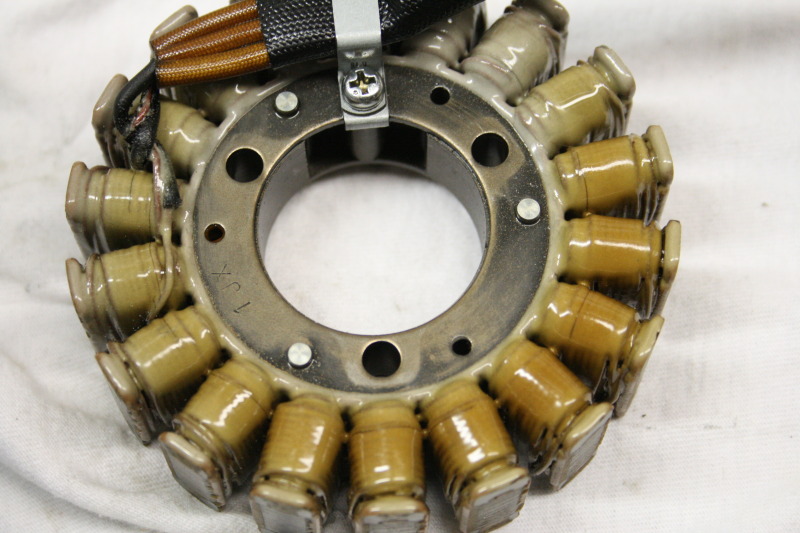
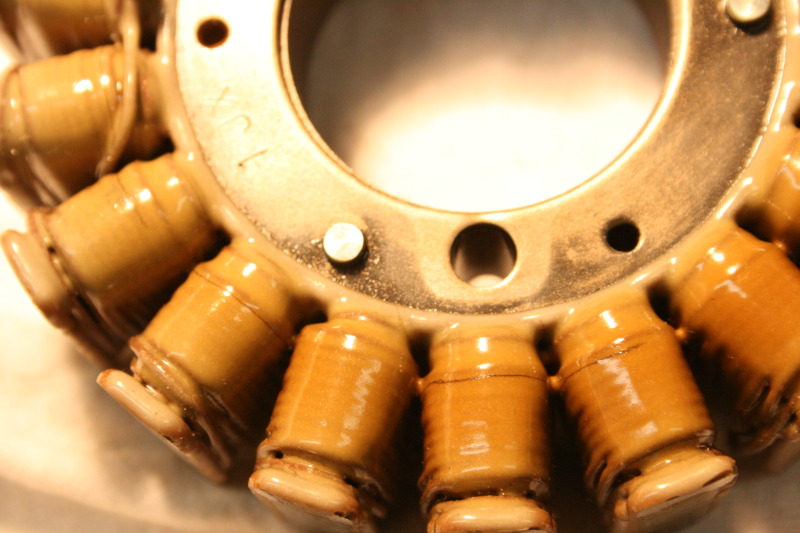
Dan
Last edited by dan888; Feb 4, 2013 at 01:01 AM.
